


Thank you for Subscribing to Electrical Business Review Weekly Brief

Helix Electric
Eric Simmons, Vice President of Risk Management
A Strong Safety Culture Addresses Every Risk. Mental Health is No Exception
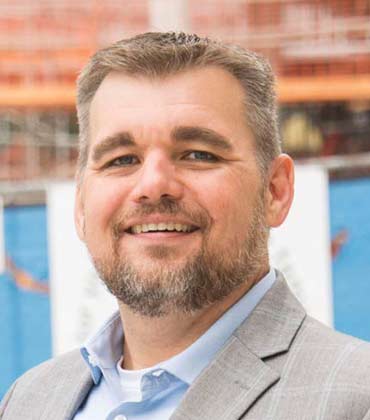
Eric Simmons
Eric Simmons is the Vice President of Risk Management at Helix Electric, a leading electrical contractor with over 3,000 employees and over $1 billion in annual revenue, with operations spanning from Hawaii to Washington, D.C. With nearly two decades at Helix Electric — beginning in an operational field role before moving into safety and risk leadership — Simmons is a nationally recognized speaker on mental health, suicide prevention, and construction safety culture.
The construction industry has learned how to manage risk. We identify hazards, build systems to control them, and empower our teams to act. But one of the most serious threats facing construction workers today is often unrecognized until it reaches a crisis point. In a typical year, more construction workers die by suicide than from job-site incidents. Construction consistently ranks among the highest industries for suicide, and in 2021, 56 out of every 100,000 male construction workers died by suicide, compared with 32 per 100,000 male workers across all industries, according to the Centers for Disease Control and Prevention. According to the National Alliance on Mental Illness, nearly two-thirds of U.S. construction workers reported experiencing anxiety or depression in 2025, up sharply from 54% just one year earlier. The threat spans every corner of the field, and professionals must bring to it the same focus, rigor, and accountability they dedicate to physical hazards. Address the Root Causes Construction workers face a unique combination of factors that contribute to these statistics. Construction workers are often subject to tight schedules, physically demanding work, long hours, and time away from home. Combine these factors in a traditionally male-dominated field that prizes resilience, and many workers feel uncomfortable asking for help or acknowledging that they need it. Instead, they often keep their struggles to themselves. When workers receive no relief, those burdens do not disappear. They intensify. Without healthy outlets or meaningful support systems, some workers turn to alcohol, drugs, reckless behavior, or other unhealthy coping mechanisms. Each of these behaviors may be an attempt to manage stress, physical pain, anxiety, or isolation, but often they only mask the issue while intensifying it over time. Make Mental Health Part of the Safety Plan The construction industry has long recognized the physical dangers and has made significant strides in preventing and managing physical injuries. The moment a worker sustains an injury, the team mobilizes. Coworkers provide first aid, supervisors coordinate treatment, and many companies use “stay at work,” or “return to work” programs to keep the injured worker connected throughout their recovery. Mental health deserves the same urgency and care. Yet it rarely receives it. When someone battles a mental health challenge, the path forward is often murky. Safety is not one-dimensional. We build systems to identify hazards, prevent incidents, and manage the incidents that do happen. The tools to support mental health may differ from those designed to prevent injuries, but the systematic approach is similar. Recognize, prevent, and manage. Develop Leaders Who Know What to Look For The biggest obstacle between a struggling worker and the help they need is often the stigma that exists about asking for help, especially when it is related to mental health. When site leaders openly acknowledge that mental health is a legitimate concern, they signal to every worker on the crew that it is safe to speak up. That kind of culture is not built through handouts at orientation. It is built by leaders who are present, ask the right questions, and listen without judgment. Repeated consistently, those actions build trust, strengthen connections, and create the foundation for real communication. Field leaders genuinely care about the well-being of the people they lead, and many may recognize that something is wrong. Increased irritability, withdrawal, declining performance, changes in mood, or statements suggesting hopelessness can all be warning signs. Without the right tools, however, leaders may unintentionally avoid or discourage the very conversation that could make a difference. No one expects these leaders to serve as clinicians or to shoulder the burden of resolving psychological struggles, but organizations can equip them to recognize behavioral changes that may indicate something more serious and to provide the knowledge needed to connect people with resources. Build a Network of Resources Building connections and forging trust help recognize and prevent mental health crises, but you also need resources to support these efforts. There is no single answer here, just as there is no single issue that can create mental health risks. Resources can take many forms. Employee Assistance Programs provide professional support when it is needed. Wellness initiatives help employees improve their physical and mental health. Community involvement programs create opportunities for connection and purpose. Flexible time-off policies allow workers to rest, recharge, and address personal challenges before they become crises. Financial wellness resources can help reduce one of the most common sources of stress. No single program solves every problem, but together these resources create a stronger support system. At Helix Electric, we have built a robust toolbox of resources to support mental health. Our employee assistance program provides all employees with immediate 24-hour access to support on stress, anxiety, depression, substance abuse, relationship issues, grief, and emotional well-being — 365 days a year, via inperson or virtual visits. Our wellness program provides training and resources on a variety of topics to improve overall employee health. Our Helix Helping Hands program creates opportunities for employees to support their communities and strengthen connections with one another. Our flexible PTO program allows employees to take a break and address challenges without losing income, and our retirement programs and financial planning resources build financial stability. Develop a Safety Culture That Leaves No One Behind Strong safety cultures are built on awareness — not just of hazards, but of people. Mental health is not separate from safety. It is a critical part of it. The tools exist. The knowledge is there. What matters now is the willingness to act—to build environments where workers feel supported, leaders feel prepared, and no one has to carry the weight alone.The articles from these contributors are based on their personal expertise and viewpoints, and do not necessarily reflect the opinions of their employers or affiliated organizations.
